Cloud repatriation: why companies are bringing AI back on-premises
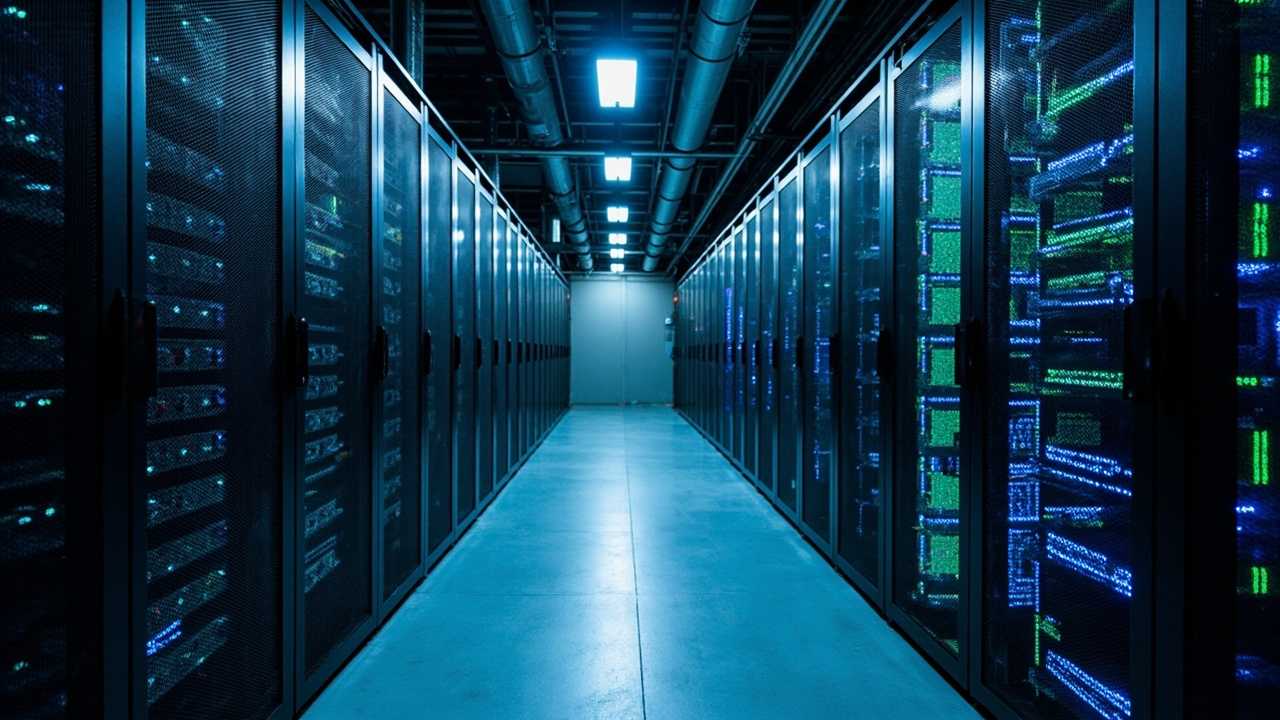
The cloud-first narrative has dominated for a decade. But 2024-2026 brought a shift: specific workloads, especially AI training and inference, are returning to the corporate data center. It is not nostalgia, it is financial and operational calculation.
Here is why selective repatriation is happening and when it applies to your organization.
What Does Cloud Repatriation Mean in 2026
Cloud repatriation is the movement of bringing workloads that were in public cloud back to on-premises infrastructure or to a dedicated provider. It is not a massive “everyone back to on-prem,” it is a selective decision per workload.
The workloads that move most are those with high opaque costs and where latency or compliance matter: training large models, real-time inference, regulated processing.
Why AI Drives the Comeback
- GPU compute cost. Sustained training large models on a hyperscaler carries an hourly cost that is significantly higher than on-premises infrastructure purchased over a 36-month horizon when the workload is stable.
- Latency between training and data. Moving terabytes to the cloud to train adds latency. On-premises infrastructure eliminates that transfer leg.
- Data sovereignty and residency. When data must not leave the country or the corporate network, on-prem is the direct option. Cloud with dedicated zones adds complexity.
- GPU availability. GPU availability from hyperscalers has become intermittent. Owning the GPUs eliminates the wait queue.
- Vendor lock-in. In-house stack on commodity hardware reduces dependence on a single vendor’s decisions.
When NOT to repatriate
Cloud remains better for very specific cases: elastic workloads, unpredictable spikes, global presence with low regional latency, managed MLOps, pre-trained models via API.
An ideal application scenario in the Mexican context would be to identify workloads with sustained cloud spend and stable demand. When monthly spend crosses a certain threshold and the workload is not elastic, the CAPEX of buying your own GPUs starts to become financially more efficient than the recurring OPEX.
A hybrid architecture decision, not a dogmatic one
The right question is no longer cloud vs on-prem. It is which workload goes where, with which SLAs and at what measurable unit cost. On-prem for heavy training and sensitive data. Cloud for elasticity and global delivery. That is the architecture that wins projects in 2026.
Sources
[1] IDC — Worldwide Cloud Repatriation Research (industry research): https://www.idc.com/
[2] Gartner — Public Cloud Repatriation Trends (industry research): https://www.gartner.com/
[3] NVIDIA — DGX / HGX On-Premises AI Infrastructure (vendor reference): https://www.nvidia.com/en-us/data-center/dgx-systems/
[4] Dell — PowerEdge AI Servers (vendor reference): https://www.dell.com/en-us/shop/dell-poweredge/servers/
[5] Wikipedia — Cloud Repatriation (background reference): https://en.wikipedia.org/wiki/Cloud_repatriation
Want to master this?
Noxtel Academy →