5G and edge data centers: how Telcel, AT&T and Telefónica are reshaping infrastructure in Mexico

5G in Mexico stopped being a promise. Telcel, AT&T and Telefónica already operate commercial 5G networks in the country’s main cities, and that is pushing carriers to deploy edge data centers close to the antennas. It is a layer of infrastructure that changes where compute lives.
Here is what is happening in Mexico’s telecommunications ecosystem and what it means for a company operating data centers.
What 5G has to do with data centers
5G cuts the latency between the user’s device and the carrier’s network down to low single-digit milliseconds in real conditions. But that latency is only achieved if the processing lives close to the user, not in a central data center hundreds of kilometers away.
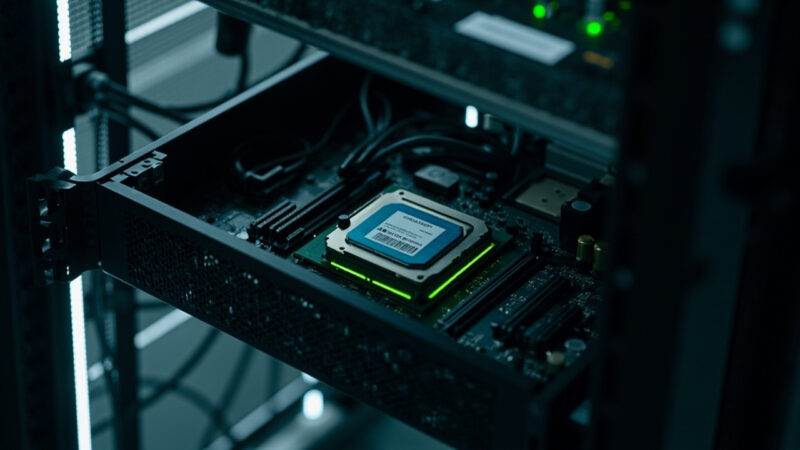
That is why Telco carriers are deploying micro data centers near antennas and aggregation points. These edge nodes host the network functions that need low latency: UPF (User Plane Function), content caches, AI functions, and IoT gateways.
What the carriers are doing in Mexico
The three main carriers in Mexico are deploying edge infrastructure with different strategies. The names Telcel, AT&T Mexico and Telefónica Mexico (brand Movistar) are publicly known from their service portfolios.
- Telcel (América Móvil) operates the country’s largest 5G network, with coverage in Mexico City, Guadalajara, Monterrey and other metropolitan areas. Its edge model combines proprietary data centers with colocation infrastructure.
- AT&T Mexico operates 5G in the main cities and has strengthened its presence in industrial zones and logistics corridors, with emphasis on massive IoT and connected vehicle use cases.
- Telefónica Mexico (operating under Movistar) has focused its 5G strategy on B2B enterprise services and partnerships with hyperscalers for hybrid edge capabilities.
Use cases driving the edge
Edge computing is not justified by speed alone. The use cases pushing carriers to deploy edge nodes in Mexico include:
- Autonomous vehicles and ADAS. Vision and decision processing requires low latency between sensors and CPU.
- Smart manufacturing. Collaborative robotics, vision-based quality control and automated logistics in plants.
- Augmented and remote reality. Industrial applications, remote maintenance and training that need rendering close to the user.
- Industrial IoT. Thousands of sensors sending continuous telemetry that is processed and aggregated locally before being sent to the central data center.
What it means for your data center
The edge does not replace the central data center; it complements it. A hybrid architecture with edge nodes and a core data center lets you keep control of critical information while gaining latency where it matters. For companies operating in multiple cities, deciding where to place workloads and where to process locally is a design decision that is becoming relevant in 2026.
Sources
[1] Telcel / América Móvil — 5G network in Mexico (institutional information): https://www.telcel.com/5g
[2] AT&T Mexico — 5G coverage and services (carrier portal): https://www.att.com.mx/5g
[3] Telefónica Mexico / Movistar — Enterprise 5G strategy (carrier portal): https://www.movistar.com.mx/
[4] GSMA — 5G Edge Computing (industry reference): https://www.gsma.com/
[5] Ericsson — Edge Computing for 5G Networks (vendor technical reference): https://www.ericsson.com/en/edge-computing
[6] Wikipedia — Mobile Edge Computing (background reference): https://en.wikipedia.org/wiki/Mobile_edge_computing
Want to master this?
Noxtel Academy →