34 edge data centers in Mexico: the corridor priced like fiber
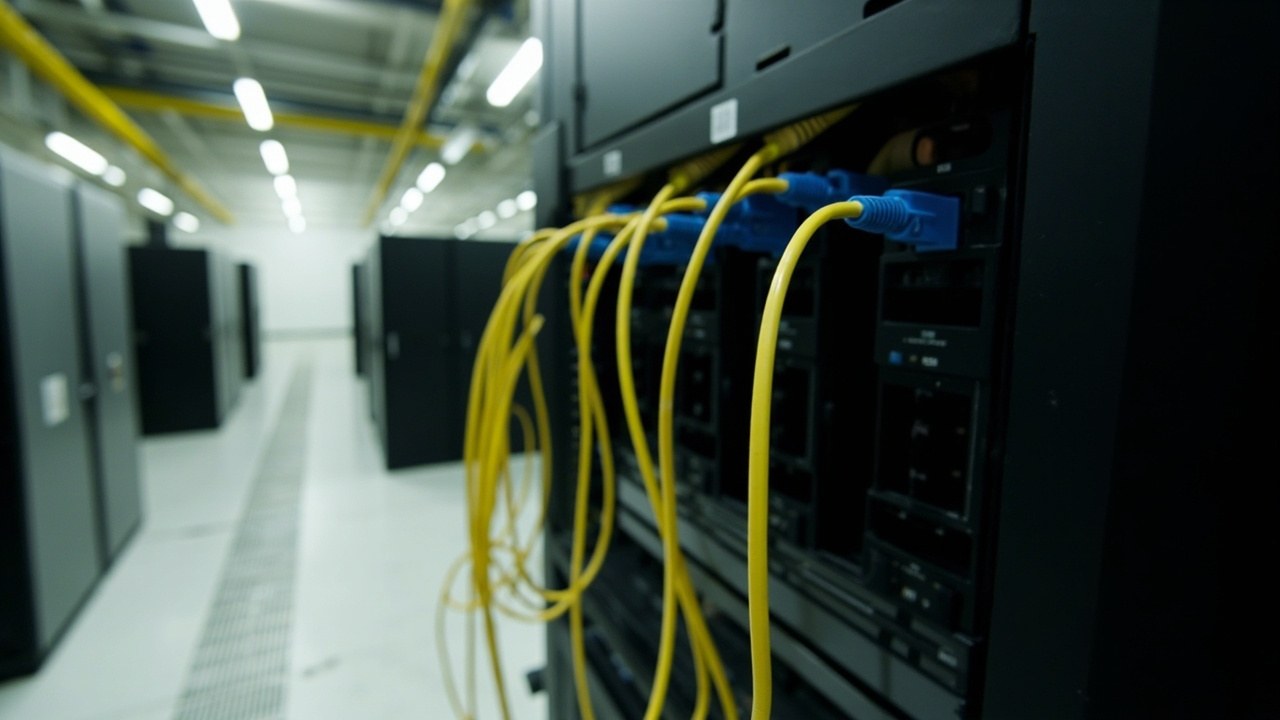
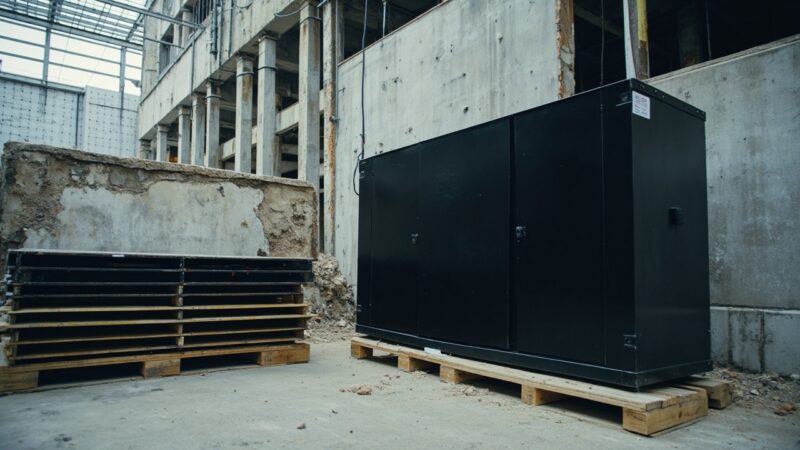
On November 5, in Hermosillo, Sonora, a Mexican operator inaugurated a server room of up to 2 MW and called it an edge data center. Edge means border, and in the Mexican market that word is usually attached to a cabinet in an office. But 2 MW is not a cabinet: it is a medium-sized data center, with utility feed, backup, precision cooling and physical security. And on that same route the operator plans 34 rooms with the same label.
The project is called TIKVA and runs from Querétaro to Phoenix. Here I break down what was quoted at each node, why 34 repeatable rooms change the equation of price, specification and maintenance, and which two figures of the project do not match each other.
TIKVA: 2,500 kilometers and one room already in service
The launch announcement, dated April 29, 2025, describes a 2,500 kilometer fiber network, underground, redundant and with dark fiber and wavelengths of 100, 400 and 800 Gbps, ready to operate in the fourth quarter of 2026. The company presented it as the first project of that kind in more than 25 years, with a single SLA and a single provider on both sides of the border. Its president, Simón Masri, states that a hyperscaler is already contractually committed.
The inauguration note, dated November 5, adds the geography: of the 2,500 kilometers, 2,150 are in Mexico and 350 in the United States, crossing eight states along the Pacific coast —Aguascalientes, León, Irapuato, Celaya and Querétaro— and entering through Nogales. The network has 32 amplification points and 288 fibers, and 34 edge data centers are planned along the corridor.
The first one was not Hermosillo’s. In September the first phase was inaugurated in Aguascalientes, with 300 million pesos (20 million dollars) that included a data center, an amplification site and more than 100 kilometers of buried fiber. Physical progress was around 85 %, with financing from Proparco and DEG (KfW group). In May it joined the CSN-2 submarine cable from Telconet, with a terrestrial stretch of almost 590 kilometers between Querétaro and Veracruz to integrate it. Nokia is the main supplier of the network equipment.
One clarification: 2 MW is a declared ceiling, not an installed load, and there is no public documentation about its actual use nor about the other 33.
Edge does not describe what was inaugurated
The problem of this case is not about power: it is about vocabulary, and vocabulary is what decides how you buy.
Mexico Business News described the Hermosillo installation as a node within TIKVA and argues that edge data centers work as interconnection, cache and localized inference nodes "instead of being multi-megawatt hyperscale data center campuses". In the same note, the CloudHQ campus in Querétaro appeared scaling toward 288 MW of IT load. The comparison is useful: a 2 MW room is much smaller than that campus, but it is still a data center with substation, batteries, cooling with redundancy, access control with logging, video surveillance and delivery documentation.
The risk appears when the name becomes the purchasing standard. If the market calls the room edge, the package that gets quoted will also be an edge package: one cabinet, a small backup, a technician when it fails. Then the build delivers less than its name promises, and nobody notices until there is a real load connected. The difference between an edge data center and a border one is not defined by the size of the project: it is defined by the standard of the installation and the SLA. On that difference between hyperscale, enterprise and edge, this is the guide we already published.
34 repeatable rooms change the quoting equation
Here is the part the headline hides: a corridor with 34 rooms is not 34 quotes, it is a standard, and in a standard volume changes the price of each node.
What can be standardized before the build exists: the room template (footprint and circulation areas), the power package (kW per node and autonomy), the security package (access control and video surveillance with the same criterion), the documentation file (drawings, maintenance protocol and logbook per node) and the contract (response time, maintenance window and penalty per node, not per corridor). What cannot be standardized is the utility feed: each node lands on a different point of the network, with different supply quality and different energization date. And that is the kind of gap that we already identified on another Mexican fiber corridor.
Our own calculation puts the corridor at scale. If the 34 rooms were sized at Hermosillo’s declared ceiling, the project would add up to as much as 68 MW: somewhat less than a quarter of the 288 MW of IT load that the same outlet attributes to CloudHQ in Querétaro. It is a ceiling, not a promise: there is only one public capacity, the other 33 are unknown, and a megawatt on paper is not an energized megawatt. What the calculation shows is the scale: 34 nodes that share a design are bought as a program, not as 34 separate projects.
The five elements you have to quote per node
The standard of a repeatable room is not defined by the UPS datasheet: it is defined by five decisions that are made once and replicated 34 times.
| Node element | How it is quoted today | What to demand in writing | Reference |
|---|---|---|---|
| Power and backup | A rectifier and a battery, with "plenty of autonomy" | Autonomy in hours at the real load, single-line diagram and transfer test | IEC 60364-7-705 · NOM-001-SEDE-2018 |
| Cooling | Installed precision cooling, with no documented maintenance | Declared redundancy (N+1 or 2N), capacity in kW at the design point and maintenance window | TIA-942 |
| Access control | A key that the operator hands to its own staff | Who enters, with what credential, how the logbook is kept and how long it is retained | ISO 22237 · TIA-942 |
| Video surveillance | Cameras that record, with no declared retention | Perimeter coverage, retention days and who downloads evidence | NFPA 75 · ISO 22237 |
| Cabling and documentation file | Customer fiber, operator build and drawings that nobody has | Connectorization, labeling, as-built drawings per node and owner of the documentation | TIA-942 |
None of the five elements is exotic: they are the same ones of a medium-sized data center, and each one has a standard behind it. TIA-942 governs the design of the installation; IEC 60364-7-705, telecommunications and information technology installations; ISO 22237, operational continuity; NFPA 75, IT equipment against fire; and in Mexico, NOM-001-SEDE-2018, electrical installations. The point is not the documentation file: it is that the same criterion can be verified 34 times.
The amplifier shelter: from 600 W to 12 kW
The corridor has 32 amplification points and nobody is auditing them. A Data Center Dynamics analysis dated November 5 quantifies that asset: the in-line amplifier (ILA) shelter is a shelter every 80-100 kilometers of terrestrial fiber that houses repeater equipment and that, like its cousins the data centers, "houses power infrastructure and redundant cooling".
Densities have risen over the years. Initial designs supported roughly 600 to 800 W per rack; today between 2 and 4 kW per rack are consumed, 5 to 6 kW and up to 12 kW per cabinet are expected in hyperscaler deployments. With 12 kW per rack, an ILA of 24 racks requires about 288 kW of IT capacity. Exa reports up to 25 kW per rack at some sites, with ILAs of eight racks adding up to 200 kW, and projects that some of them could reach 500 kW. DC Blox offers sites with 155 kW in total, expandable to 465 kW, with 72 hours of on-site fuel.
The consequence for TIKVA is direct: an amplification point that requires 12 kW per cabinet is, in power, a room, and in data center equipment it is a budget. When the road supply fails, the 72 hours of fuel that an operator declares are the difference between a network incident and a service outage. It is the kind of asset that a fiber operator does not offer you and that you are going to need. On the weight of the evidence: the analysis is not signed by an individual author and the densities come from statements by four operators, not from a standard. They are orders of magnitude, not specifications.
Two figures of the project that do not match
The first one: the launch announcement talks about 29 intermediate amplification points (ILAs and points of presence) along the route, and the inauguration note counts 32 amplification points. The corridor grew or the count changed; no public document explains it.
The second one: the inauguration note presents Hermosillo as the first edge data center of the corridor in its headline and its first paragraph, and in the same text it says that in Aguascalientes, in September, "the first of the 34 planned edge data centers entered operation". Both statements are in the same note, reproduced literally by Dossier Político and by the operator’s website.
In a corridor of 34 nodes, the documentation is the asset: if the project header already differs in the number of points, the per-node specification has to be signed node by node, with an owner and a review.
What you can demand before the next node exists
A 2 MW room is not quoted as a fiber shelter. It is quoted as a data center: medium-voltage power, backup with defined autonomy, cooling with documented maintenance, access control with logbook, video surveillance with retention and an auditable documentation file node by node. At Noxtel we run that technical audit before the build starts: request an assessment of your data center. If your operator has 34 rooms on the route, or you inherited an inventory of shelters, the question that orders the rest is just one: does each node have a data center documentation file, or only a rack and a contact?
Sources
Want to master this?
Noxtel Academy →