Eaton 9395X: what changed compared to the classic 9395P and when it makes sense to migrate
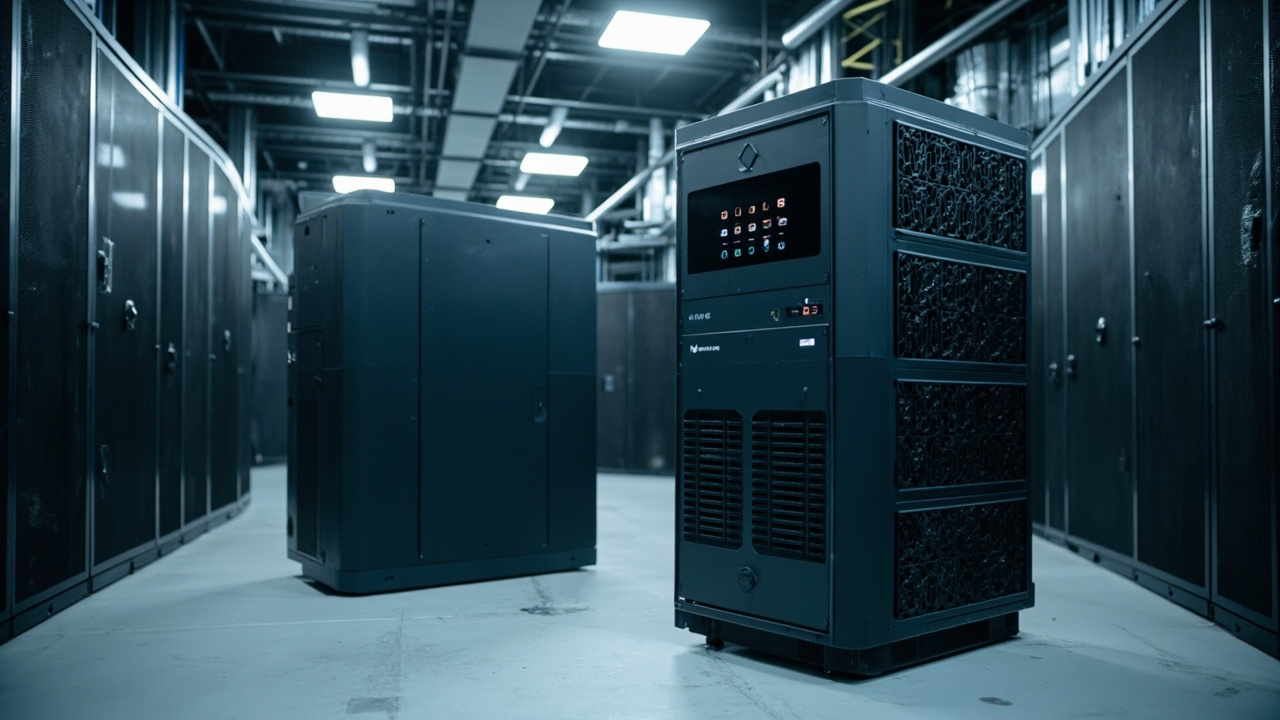
The Eaton 9395X is the evolution of the classic 9395P, a platform that for more than 15 years was the reference in three-phase high-power UPS units. The transition between the two generations is not a revolution: it is a carefully planned evolution designed to maintain operational compatibility and leverage the existing installed base.
For data centers in Mexico that operate Eaton 9395P UPS units aged 10-15 years, the 9395X represents a natural migration path. This guide summarizes the technical differences, the improvements, and the criteria for deciding when it makes sense to migrate.
What changed from the 9395P to the 9395X
The technical differences between both platforms can be summarized in five axes:
- Energy efficiency: the 9395P reached up to 96.3% in double conversion; the 9395X reaches 97%, with the additional ESS (Energy Saver System) module that pushes efficiency to 99%.
- Per-module capacity: the 9395P had 50-275 kVA modules depending on version; the 9395X standardizes interchangeable 300 kW power blocks/modules (real power factor 1.0), hot-swappable, designed for megawatt scale.
- Power factor: the 9395P worked at factor 0.9 (apparent power greater than real power); the 9395X operates at factor 1.0, delivering more real power per nominal kVA.
- Monitoring platform: the 9395P used the Eaton Power Xpert platform; the 9395X integrates with Eaton Brightlayer, a more modern suite with analytics and ML capabilities.
- Connectivity: the 9395X adds dual Ethernet ports, remote firmware management, and cybersecurity options (signed firmware, authentication) that the 9395P did not have natively.
What stayed the same
Eaton was conservative on the aspects that matter for platform migrations:
- Same mechanical footprint: the 9395X occupies the same physical space as the equivalent-capacity 9395P, simplifying replacements.
- Same operator interface: the screen and menus are consistent, reducing retraining of technical staff.
- Same control logic: redundancy, bypass, and transfer work the same way, simplifying operating procedures.
- Compatibility with existing battery cabinets: in most cases, the 9395P VRLA batteries can be reused with the 9395X, depending on age and condition.
- Same service coverage: the certified technician network covers both platforms.
When migrating to the 9395X makes sense
The migration decision depends on several factors:
- Age of the current UPS: if the 9395P is more than 12 years old, the capacitors and fans are close to end of useful life. Migrating to the 9395X avoids an unexpected failure.
- Load growth: if the IT load has grown beyond 70% of the 9395P nominal capacity, migrating to the 9395X with power factor 1.0 delivers more real power.
- Efficiency needs: if the energy cost is high and the data center operates 24/7, the 1% efficiency improvement of the 9395X translates into measurable savings.
- Brightlayer integration: if the company is adopting modern monitoring and analytics platforms, the 9395X is the natural choice.
- Cybersecurity: if the UPS is on a network with strict cybersecurity requirements, the new 9395X capabilities (signed firmware, authentication) are an argument.
When NOT to migrate
There are scenarios where staying with the 9395P or replacing it with another platform is more reasonable:
- 9395P less than 8 years old with stable operation: the migration investment is not justified.
- Complete change of vendor: if the company is migrating to Vertiv or Schneider for strategic reasons, there is no point in keeping the Eaton installed base.
- Sensitive upfront cost: the 9395X is more expensive than a new 9395P (if available as refurbished).
Quick comparison
- Double-conversion efficiency: 9395P 96.3% vs 9395X 97% (0.7% improvement).
- Power factor: 9395P 0.9 vs 9395X 1.0 (more real power).
- Modules: 9395P fixed or modular depending on version vs 9395X modular 300 kW (factor 1.0) hot-swappable, megawatt scale.
- Monitoring: Power Xpert (legacy) vs Brightlayer (modern, analytics).
- Cybersecurity: basic vs advanced (signed firmware, authentication).
Need help with
Eaton?
At Noxtel we specialize in the design, supply, installation, and preventive maintenance of critical infrastructure for data centers. If you are comparing equipment, need to size a project, or require certified technical support for
Eaton
solutions, our engineering team is ready to help.
? Contact us today and schedule an assessment with the Noxtel team
Sources
[1] Eaton — 9395X product page: https://www.eaton.com/mx/es-us/catalog/backup-power-ups-surge-it-power-distribution/backup-power-ups/eaton-9395xp-ups.html
[2] Eaton — 9395P legacy documentation: https://www.eaton.com/content/dam/eaton/products/backup-power-ups-surge-it-power-distribution/backup-power-ups/eaton-9395-ups/eaton-9395-brochure-br130001en.pdf
[3] IEC 62040-3 — Uninterruptible power systems: https://webstore.iec.ch/publication/5973
[4] Wikipedia — Eaton Corporation: https://en.wikipedia.org/wiki/Eaton_Corporation
Want to master this?
Noxtel Academy →