Carbon-Aware Computing: The New Frontier of Data Center Efficiency
Carbon-aware computing is the advanced practice of shifting compute workloads in time or in space to strategically take advantage of the moments when the electricity supplied by the local grid is cleanest. It represents the next evolutionary step after the optimization of free cooling: the goal is no longer just to reduce raw energy consumption, but to consume much more intelligently.
Where does the concept come from?
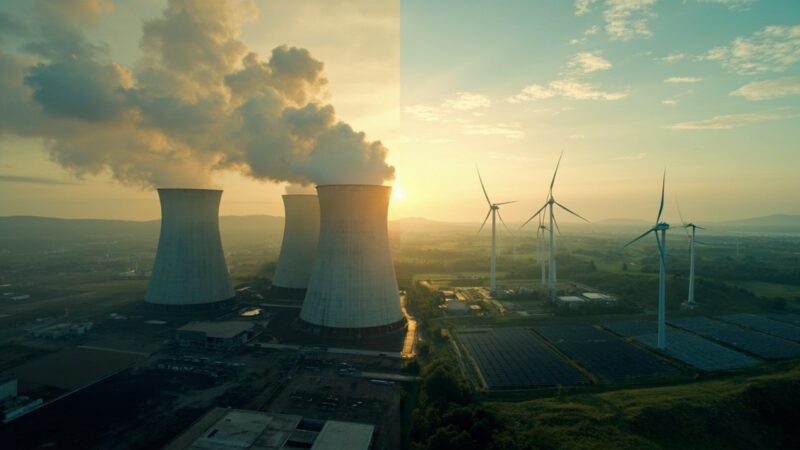
The engineering premise is direct: an electrical grid is not equally clean at all hours of the day. Its generation mix fluctuates constantly depending on the contribution of renewable sources (solar, wind, or hydro) and the entry of fossil-fuel plants running on fuel oil or coal. If your digital infrastructure’s workload is flexible, the system can be scheduled to run it preferentially during clean-energy peaks.
This methodological approach was formalized around 2021 thanks to Google’s research on its intelligent computing platform and the subsequent adoption of the 24/7 Carbon-Free Energy methodology. Today, what started as a standard exclusive to hyperscale environments is starting to be implemented at an accelerating pace in corporate-sector data centers.
How is carbon intensity measured?
The reference metric in climate engineering is marginal carbon: the amount of CO₂ emitted into the atmosphere for each additional kWh consumed at a specific hour and geographic location. To obtain this visibility in real time, platforms integrate external signals from specialized electricity grid data aggregators, such as Electricity Maps or WattTime.
For the Mexican market, the real emission factor varies dramatically by CENACE (National Energy Control Center) region. For example, the Bajío and Noreste zones show higher penetration of solar plants and combined-cycle natural gas, while the central region depends more heavily on hydroelectric plants and fuel-oil thermal plants. Although the opacity in real-time data publication in the Mexican electricity market adds complexity compared with European markets, the technical optimization path follows exactly the same logic.
Implementation strategies
| Compute Strategy | Operating Mechanism | Ideal Workloads |
|---|---|---|
| Time Shifting (Desplazamiento Temporal) | Moves batch tasks toward the hours of the day with higher solar radiation or wind in the grid. | AI model training, massive backups, data analytics, and log processing. |
| Spatial Shifting (Desplazamiento Geográfico) | Dynamically routes compute traffic between different geographic regions based on the grid cleanliness level at each site. | Active multi-region architectures and cloud services with global load balancing. |
| Demand Response (Respuesta a la Demanda) | Reduces peak power demand during hours of high grid stress or low clean-energy availability. | Non-critical batch workloads and services with flexible latency tolerance. |
In practice, the most impactful strategy for corporate environments is time shifting, because it does not require geographic duplication of infrastructure. It works by aligning batch processing windows with the daily solar generation peak (typically 10 AM to 4 PM in most Mexican regions) and the wind generation window (overnight in the Isthmus of Tehuantepec, which supplies a large share of national wind capacity).
The choice between one strategy and another depends on the business architecture. Single-region workloads benefit from time shifting. Multi-region deployments can combine both axes. The carbon-aware scheduler integrates with the orchestrator to make automatic decisions based on the intensity signal.
Technical requirements for in-room enablement
Implementing a carbon-oriented architecture requires real instrumentation; it is not solved through passive policies. A corporate infrastructure needs three base components to operate:
1. The intensity signal: An API connection to marginal data providers (Electricity Maps, WattTime, or equivalents).
2. A compatible orchestrator: Software capable of interpreting the signal and making decisions. The most robust orchestrator today for Kubernetes is KEDA using its native carbon scaler.
3. Flexible workloads: Business processes that have the property of being deferrable (that is, that tolerate wait times of a few hours without impairing final service delivery).
For corporate data centers operating in on-premise environments, the great technical challenge is not in the hardware but in achieving transparent integration of the carbon signal with their ticketing systems and the traditional batch-processing task schedulers of the data center.
The real impact for a data center in Mexico
In Mexico, the official average emission factor sits around 0.45 kg CO₂/kWh according to data from INE (National Institute of Ecology) and CRE (Energy Regulatory Commission). However, internal hourly variations are massive.
? The design value: Scheduling and shifting a half-ton batch-processing workload from 7:00 PM (peak hour when the Mexican grid burns heavy fuels) to 11:00 AM (peak photovoltaic generation) achieves reductions of between 10% and 20% in greenhouse gas emissions associated with computing, without altering a single piece of hardware.
For a corporate data center that reports ESG (environmental, social, and governance) criteria to its parent company or to clients, carbon-aware computing is the most efficient lever to reduce Scope 2 (Scope 2, indirect emissions from purchased electricity). It enables demonstrating real mitigation on site without the need to acquire costly renewable energy certificates (RECs) or to enter complex contractual renegotiations with CFE (Federal Electricity Commission).
Challenges the industry still needs to solve
The first problem lies in the environmental accounting arena: how to certify to audits under ISO 14064 standards or GRI (Global Reporting Initiative) methodologies that the CO₂ reduction was real and not just a load movement that was executed elsewhere on the grid. Although the GHG Protocol Scope 2 Guidance standard recognizes methodologies based on the market and on grid location, dynamic carbon-driven load shifting algorithms still lack a fully globally standardized accounting category.
The second critical factor is the cost balance. Postponing massive processes to hours of lower energy intensity can lengthen job delivery times for internal users, so the ecological benefit must be rigorously aligned with business performance goals. The business case improves if there is a corporate sustainability commitment or a client in the enterprise sector that demands reporting real emission reductions.
Conclusion
Carbon-aware computing is positioned as one of the most elegant green software strategies developed in the last decade. For those data centers that have already optimized their PUE levels through advanced techniques and precision cooling, this discipline opens the next logical frontier of efficiency in this 2026: stop focusing solely on how much energy is consumed, to master the real impact of when it is consumed.
Sources
• [1] Google Research — Carbon-intelligent Computing Platform (publication index) — https://research.google/pubs/
• [2] Electricity Maps — Live Grid Carbon Intensity Data — https://www.electricitymaps.com/
• [3] Green Software Foundation — Specifications and Tooling — https://greensoftware.foundation/
• [4] Uptime Institute — Research and Reports — https://uptimeinstitute.com/resources/
• [5] Wikipedia — Green computing — https://en.wikipedia.org/wiki/Green_computing
Want to master this?
Noxtel Academy →