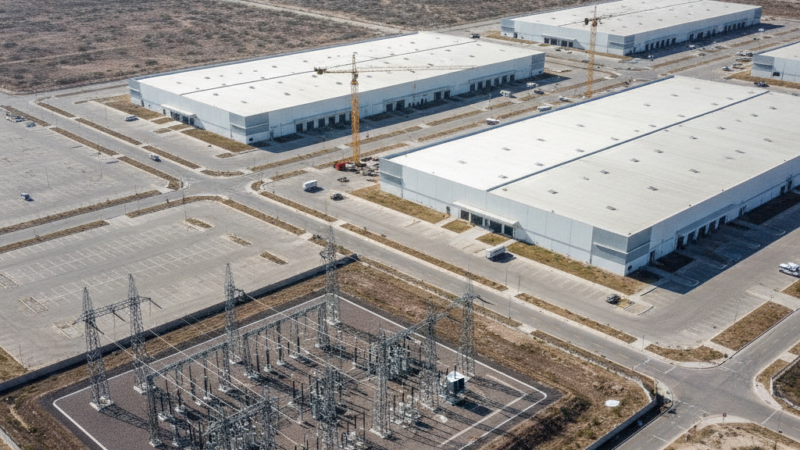
Circular data center construction: the 5 materials your project can recycle in Mexico
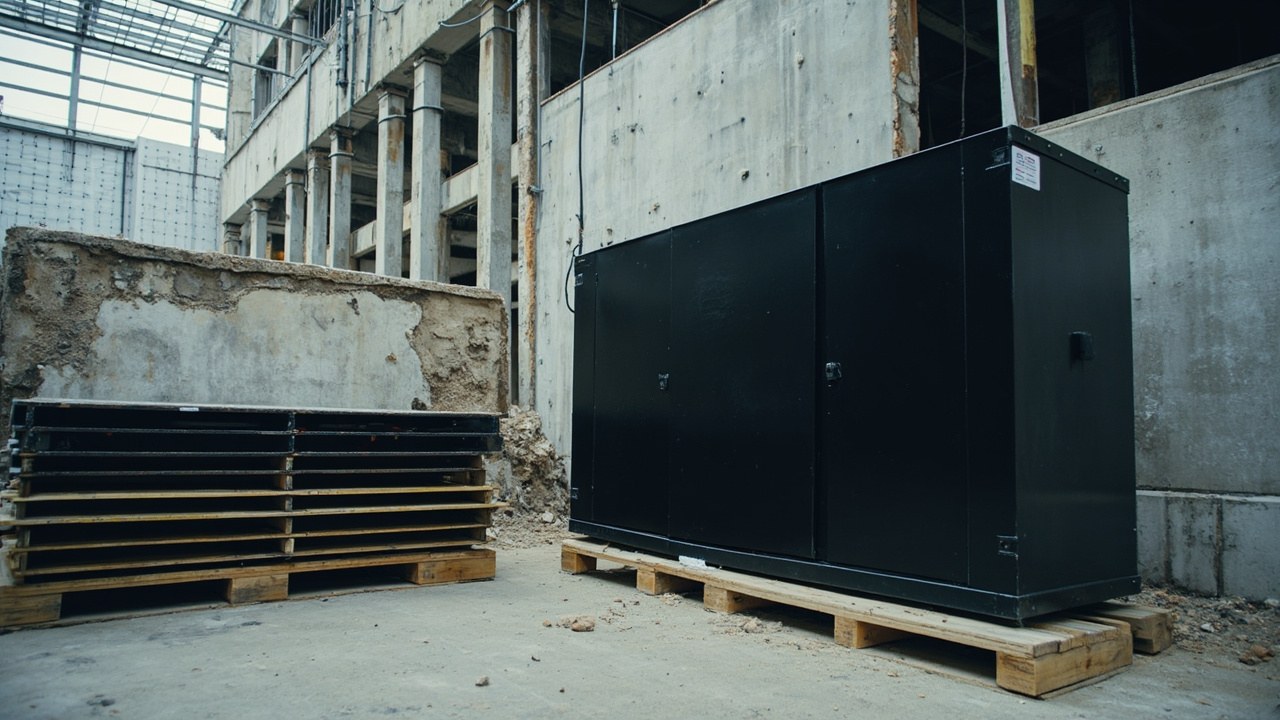
Circular data center construction sounds like brochure sustainability, but it is really an engineering question: what do you do with the building, with the plant, and with the equipment when they reach the end of their life? The short answer is that almost none of that is solved, and that unrecycled material from a site in Mexico does not go back into the construction work: it stays in storage.
This article draws on data from Arup, from SEMARNAT, from the European Ecodesign Regulation, and from a campus lease filed with the SEC.
Building reuse is not always the answer
This is the counterintuitive point. Arup documents that, after evaluating many candidate buildings for reuse, the existing constraints often leave the building so compromised that demolishing and rebuilding is generally better. The layout, the floor load, and the electrical geometry weigh more than the inherited carbon footprint.
The thesis is not demolition alone either. Reusing structural steel reduces initial emissions by up to 97 % compared with virgin steel, and moving the mechanical plant from the roof down to ground level reduces the total embodied carbon of the structure by up to 40 %, because it lightens columns and foundations. They are two design decisions that are made in the project and that nobody reviews afterwards.
Equipment weighs more than the building in carbon
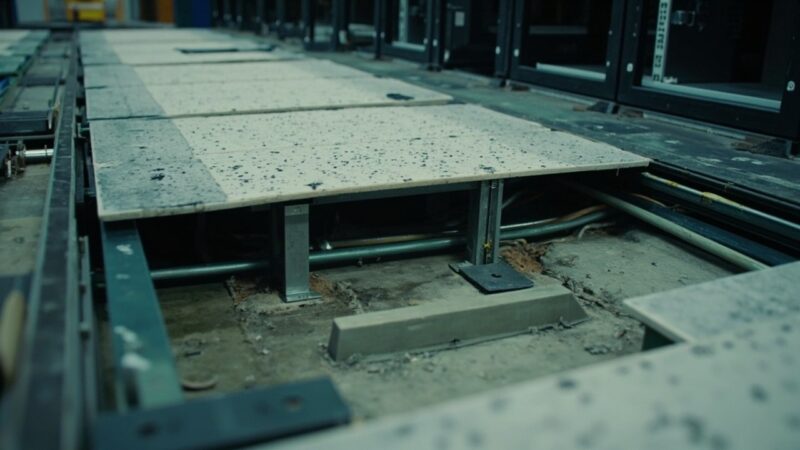
Here is the data point that changes an operator’s priorities: racks can account for 75 % more embodied carbon than the whole structure and plant block combined, and 80 % of operational carbon. Servers are replaced every three years; the building plant every 10 to 25 years, and UPS batteries as often as every five.
And the recovery model already exists outside the construction work. AWS operates reverse logistics hubs that process the hardware retired from its data centers: the racks are disassembled into individual components, and Nitro cards, server power supplies, GPUs, switches, memory modules, and fiber optics are among the ones prioritized for reuse, within a path to net zero carbon in 2040.
Steel and concrete: where the carbon of the construction work sits
The regulatory framework is already being written in Europe and already has a date for cement. Regulation (EU) 2024/1781 requires that the ecodesign requirements guarantee that products are more durable and easy to repair, upgrade, reuse, and recycle, avoiding that they become prematurely obsolete because of designs that prevent the disassembly of their key components. For cement, the Commission must set those requirements in a delegated act no earlier than December 31, 2028 and no later than January 1, 2030.
In Mexico the bottleneck is not the regulation: it is the market
Here the data hurts in a different way. SEMARNAT estimates that in Mexico 9.74 million tonnes of construction and demolition waste were generated in 2024, and that building accounts for 43.63 % of that volume, that is 4,249,931 tonnes per year. But the figure that defines the problem is another one: of every 6.5 cubic meters of rubble that enter recycling plants, only 1 cubic meter, close to 15 %, is commercialized.
SEMARNAT’s own diagnosis identifies the gap clearly: lack of market for recycled aggregates. The gap is not regulatory and is not fixed with a law: it is fixed with demand. As long as there is no construction work that pays for recycled material, the rubble from your site ends up piled up and virgin material keeps filling foundations. The conclusion is direct: circularity without a buyer is simply storage.
The ground lease decides whether your campus is a bet or an option
Circularity is decided before the construction work, in the ground contract. A case filed with the SEC shows it: a long-term ground lease over 4,077 acres with an initial term of 30 years and two 10-year extension options, base rent of USD 6,000 per acre per year for the data center area and USD 1,000 per acre per year for the solar area, under an absolute triple net scheme.
What is relevant are the conditions. The rent does not start running until construction begins in each area. There is a purchase option with a physical trigger: USD 100,000 per acre before the commercial operation date of the site’s solar generation, or USD 135,000 per acre afterwards. If construction does not start within 48 months, the landlord can terminate the contract, and the company can release the surface it does not need with 30 days of notice.
The 5 materials you can actually recycle
The operational conclusion is uncomfortable: the return of a circular project does not depend on the contractor’s good will, it depends on someone paying for the recycled material.
Sources
Want to master this?
Noxtel Academy →