When you need a dedicated DC vs a server room in your office: the 5 signals you can no longer ignore
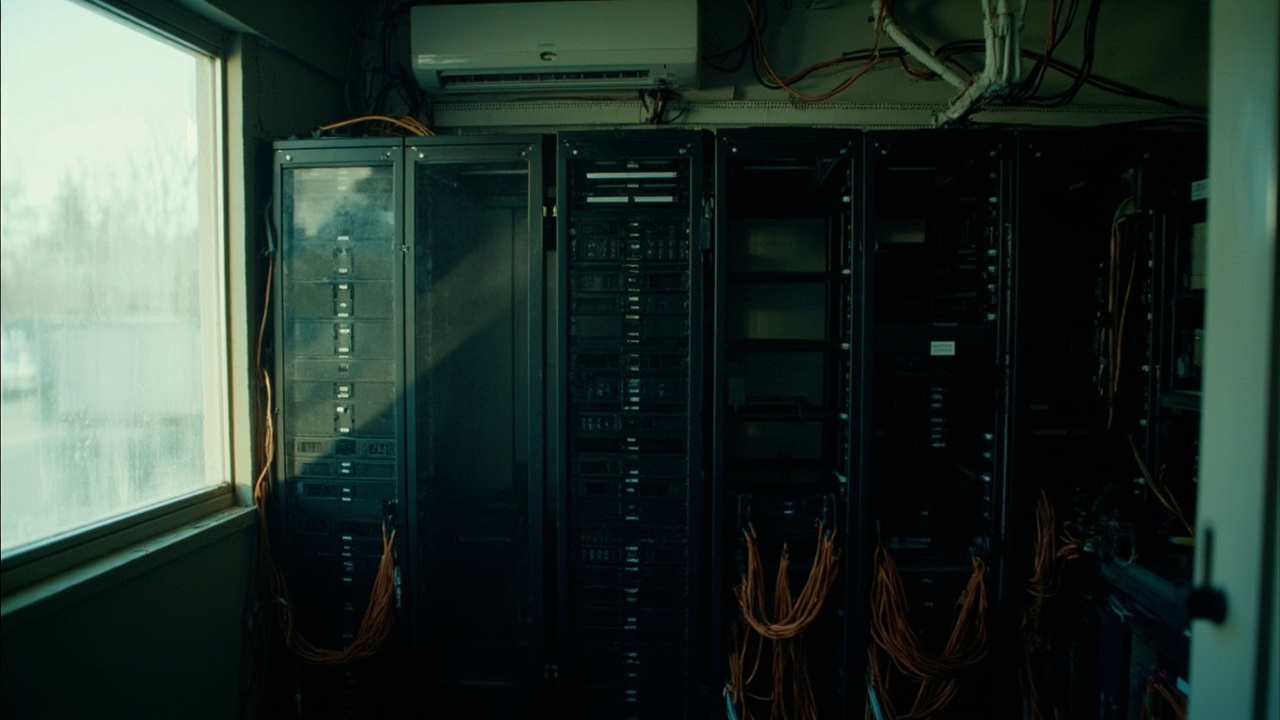
You started fixing routers with tape and a window air conditioner. It ended up being a server room with a noisy UPS, two racks without containment, and three people putting out fires every Friday. The question of when that room stops making sense is no longer theoretical: it is a budget decision for next year.
This note does not list five physical symptoms. They are five decisions you are already postponing, and that a dedicated DC resolves without you rewriting your operation every quarter.
1. The contracted demand with CFE is already at the limit and the next increase is non-negotiable
When the maximum demand of your room exceeds the current contract with CFE (DAC tariff, formerly OM, for medium voltage), the next adjustment raises the high-consumption and reactive charges, and no margin remains. Multiply the racks from 8 to 12 kW by the density you already have (8 to 15 kW per cabinet) and the number no longer fits in a branch circuit from the room.
2. The density per cabinet went from 2 kW to 12 kW and the room has no containment
If you still use a mini-split or a window air unit for five cabinets, the hot spots no longer dissipate. When you add AI or training compute servers and density grows to 15-25 kW per rack, cold aisle containment stops being an optional improvement: it becomes an operational requirement. But installing containment inside a room without raised-floor height or sealed aisle means redoing the entire room.
3. OT no longer fits with IT in the same room
It started with the router, then the security cameras, then the PLCs and HMIs. If the physical plant or the warehouse share racks with IT operations, you are already forwarding tickets between two teams that blame each other. The root cause is structural: the plant does not want servers and the servers do not want variable-frequency drives.
4. Your operations team put out the last incident and told you they cannot keep going like this
If a single person, or a team of three, answers for everything (applications, network, cooling, UPS, raised floor, contractors, CFE), that person is not operating, they are putting out fires. When someone tells you “I cannot keep going like this” it is not a complaint: it is a diagnosis. Without remote monitoring, without N+1 redundancy, and without maintenance windows, any failure is a nighttime crisis.
5. The next regulatory audit will cost you more than migrating
If the insurer, the bank, the regulated customer, or the next tender asks for evidence of where the information runs, where it is backed up, and who operates the facility, and today your answer is “in the next room”, you already have an open commercial risk. Migrating when they demand it costs more than migrating before: you pay additional premium, receive an annual audit on top, and have no margin to choose.
What changes being in a dedicated DC (and what does not change)
Changes: the person responsible for putting out the next incident (the facility operator), the capex/opex model (you absorb it monthly), the profile of the insurer and the regulator (what they verify).
Does not change: your internal latency (it still depends on the network, not the distance), your annual investment budget, or the load of putting out application fires. The latter you change with procedures, not with a DC.
The next step before requesting a quote
Measure four numbers: current contracted power (kW), average density per cabinet, number of critical tickets per month, and mean time to resolution up to remediation. With those four data points on the table, the decision stops being opinion-based and becomes a capacity exercise.
Sources
[1] CFE — DAC, OM, and PDBT tariffs in force — https://app.cfe.gob.mx/Aplicaciones/CCFE/Tarifas/Tarifas.aspx?tarifa=0
[2] Uptime Institute — Global Data Center Survey 2024 — https://datacenter.uptimeinstitute.com/rs/711-RIA-980/images/2024.GlobalDataCenterSurvey.Report.pdf
[3] IEC 62040-3 — Uninterruptible power systems — https://webstore.iec.ch/publication/5973
Want to master this?
Noxtel Academy →